Herbert Boyer and Stanley Cohen
Catalysts of GMO Technology
("DNA Double Helix," n.d.)
"Stan's lab would send us the plasmid DNA, we would do the enzymatic treatments, Stan's lab would do the transformation and selection, Annie [Stan's research asssistant] would bring back the plasmids, and we would analyze them by cleavage and gel analysis of the fragments."
~ Dr. Herbert Boyer, Biochemist (Gitschier, "Wonderful Life," Sept. 2009)
Splicing DNA
Boyer and Cohen's first step was selecting a bacterial plasmid within the bacterial cell. They chose pSC101, a plasmid already known to transfer drug resistance among bacteria. The next step was to splice the DNA piece of interest out of the bacterial plasmid using a restriction enzyme (“Herbert W. Boyer and Stanley N. Cohen”) (“Herbert Boyer and Stanley Cohen”).
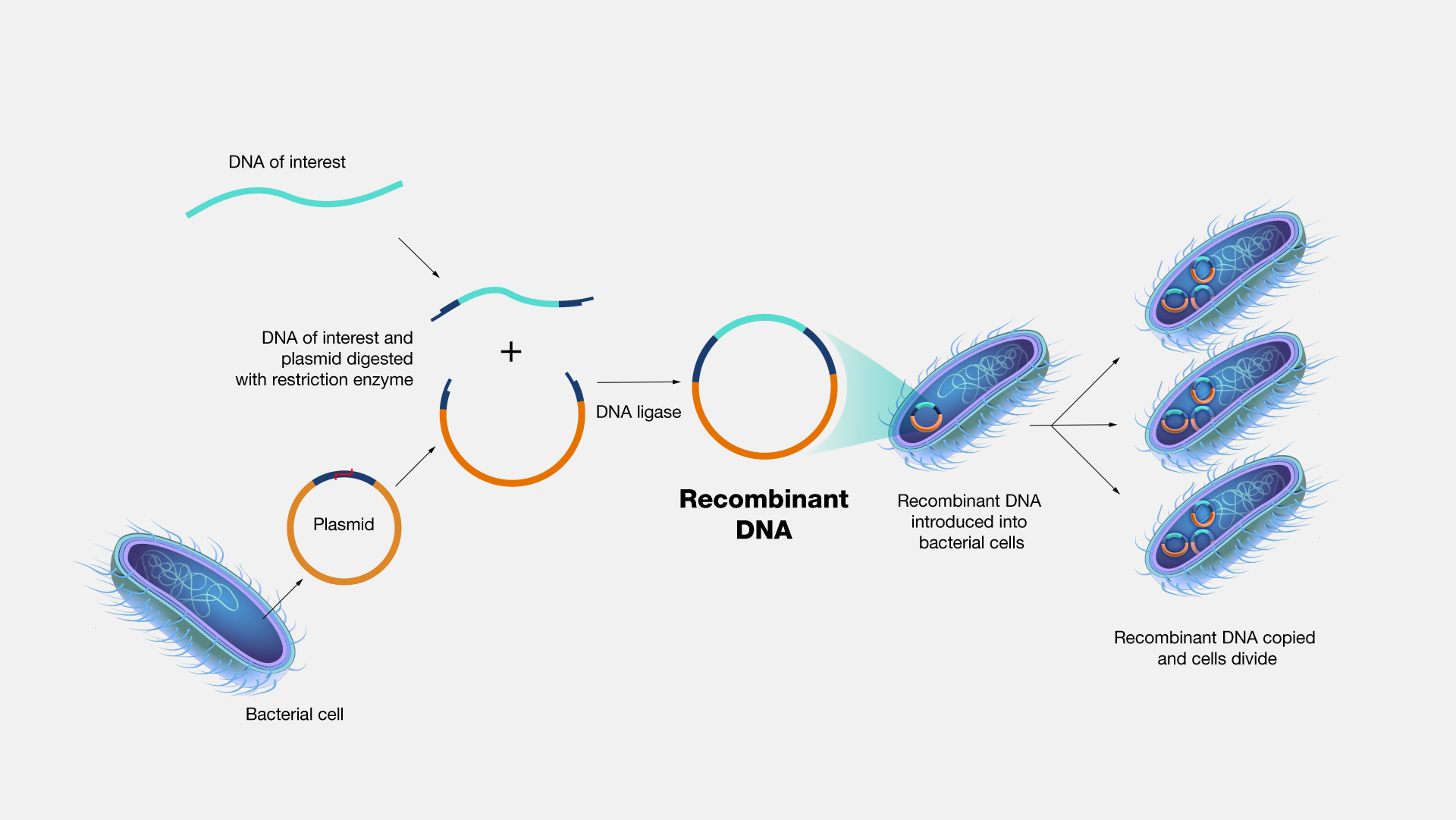
Process of Recombinant DNA
(Wetterstrand, National Human Genome Research Institute, 7 May 2024 )
"Because of the projecting single-strand ends, two fragments of DNA could be linked together easily."
(Dr. Cohen, PNAS, Science Sessions Podcasts, 18 Dec. 2023)
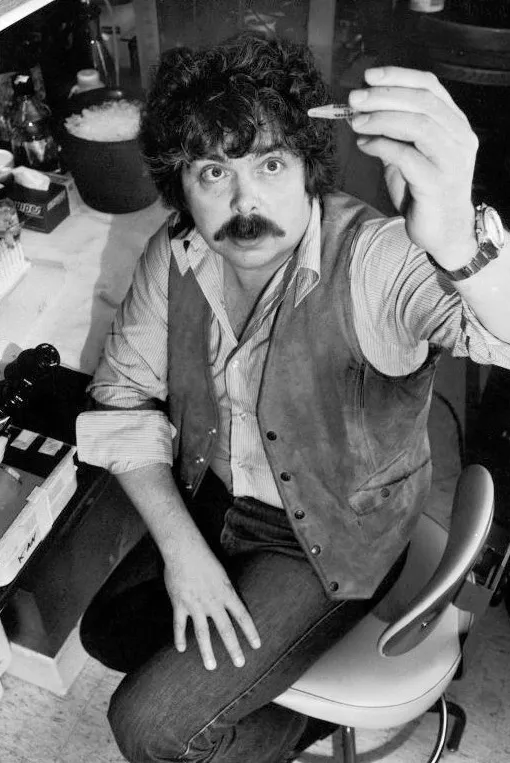
Dr. Herbert Boyer at UCSF
(Jones, Medium, 12 Nov. 2015)
The spliced piece of DNA was then inserted into another spliced plasmid. This new plasmid was called recombinant DNA. It was then introduced into a new bacterial cell, and the new offspring contained the recombinant DNA (“Herbert W. Boyer and Stanley N. Cohen”) (“Herbert Boyer and Stanley Cohen").
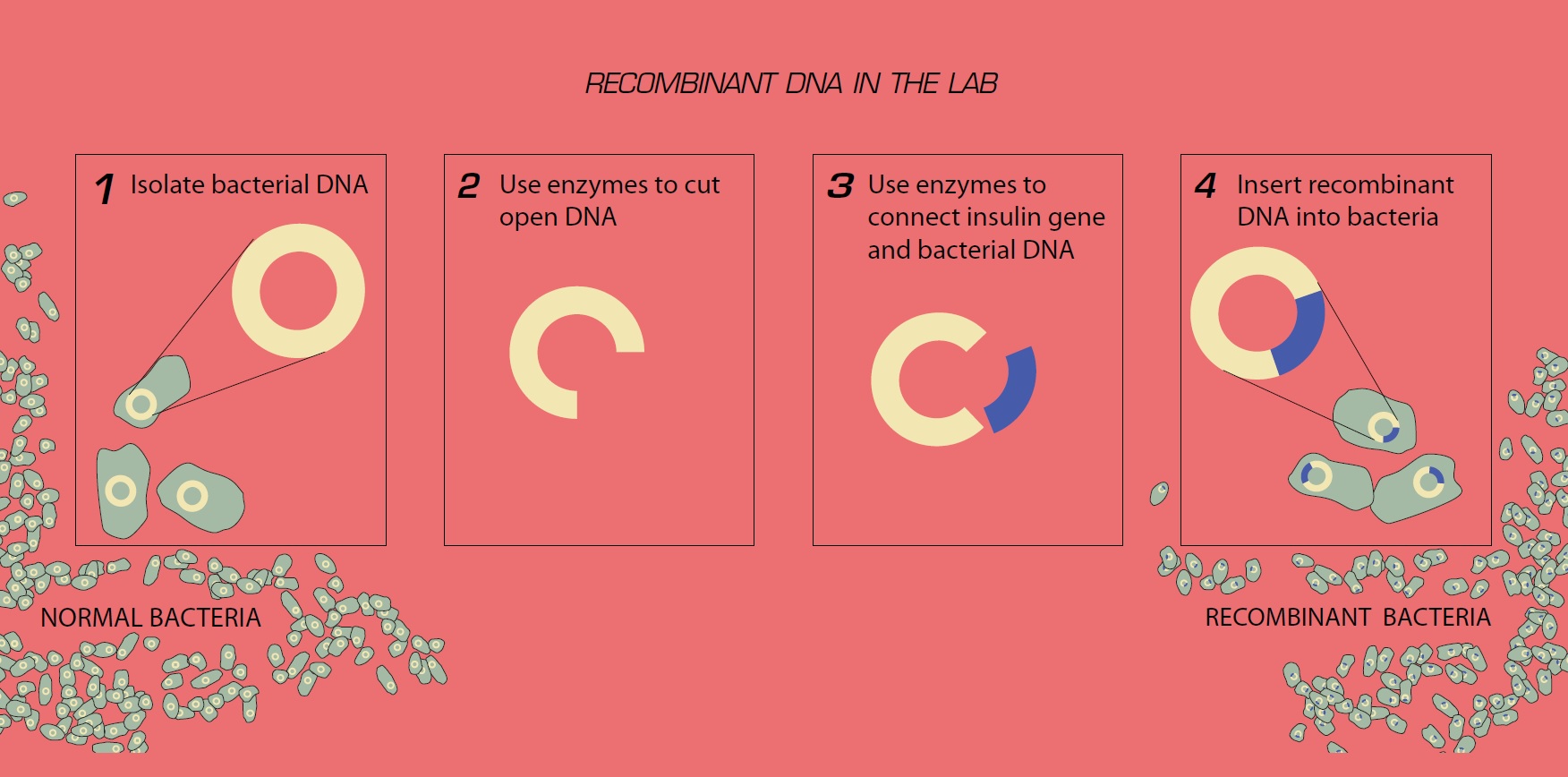
Process of Genetic Modification
(“Recombinant DNA in the Lab,” Smithsonian American Women’s History, n.d.)
Dr. Cohen's DNA Lab Equipment
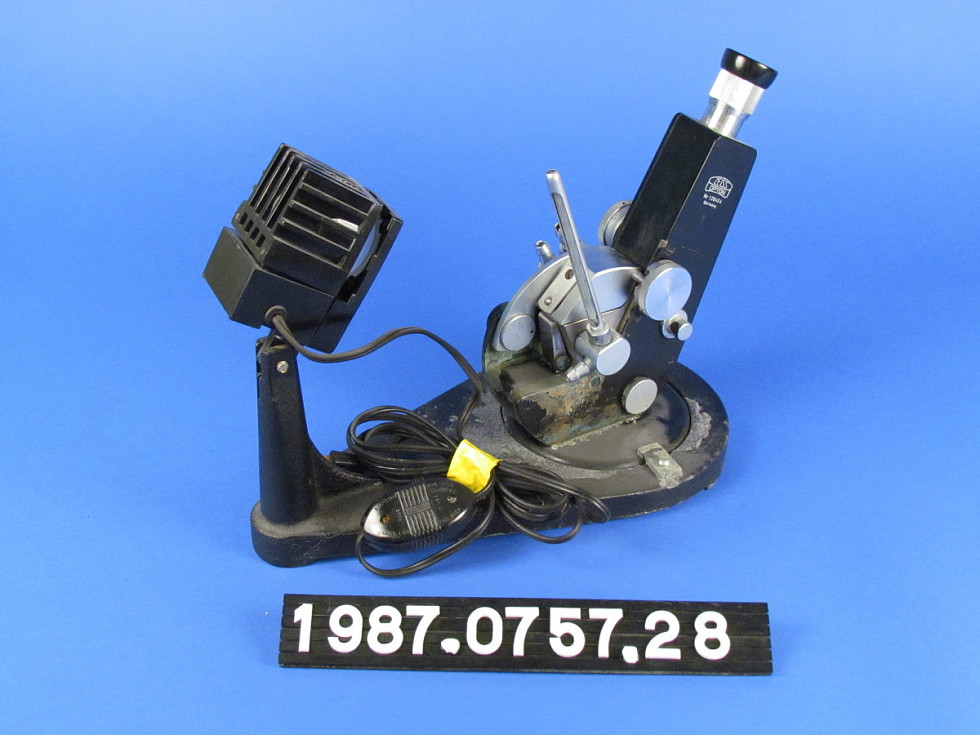
"This refractometer was used in Stanley Cohen’s lab at Stanford University in his research on recombinant DNA."
(“Recombinant DNA in the Lab,” Smithsonian American Women’s History, 1946-53")
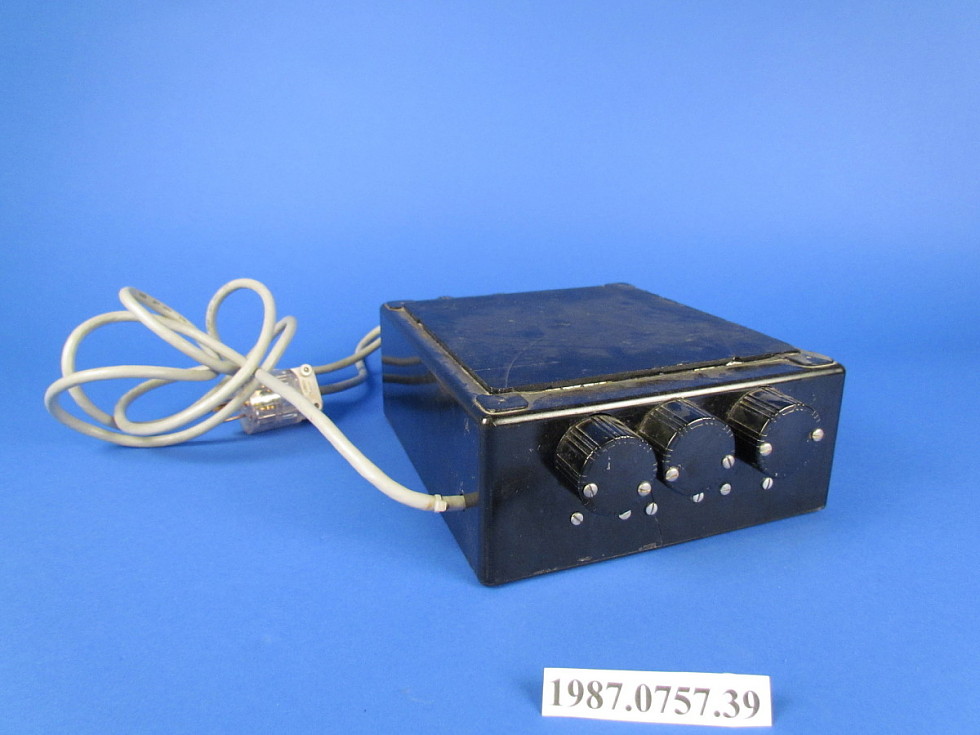
"UV light box used by Stanley Cohen for DNA research"
(“Recombinant DNA in the Lab,” Smithsonian American Women’s History, n.d.")
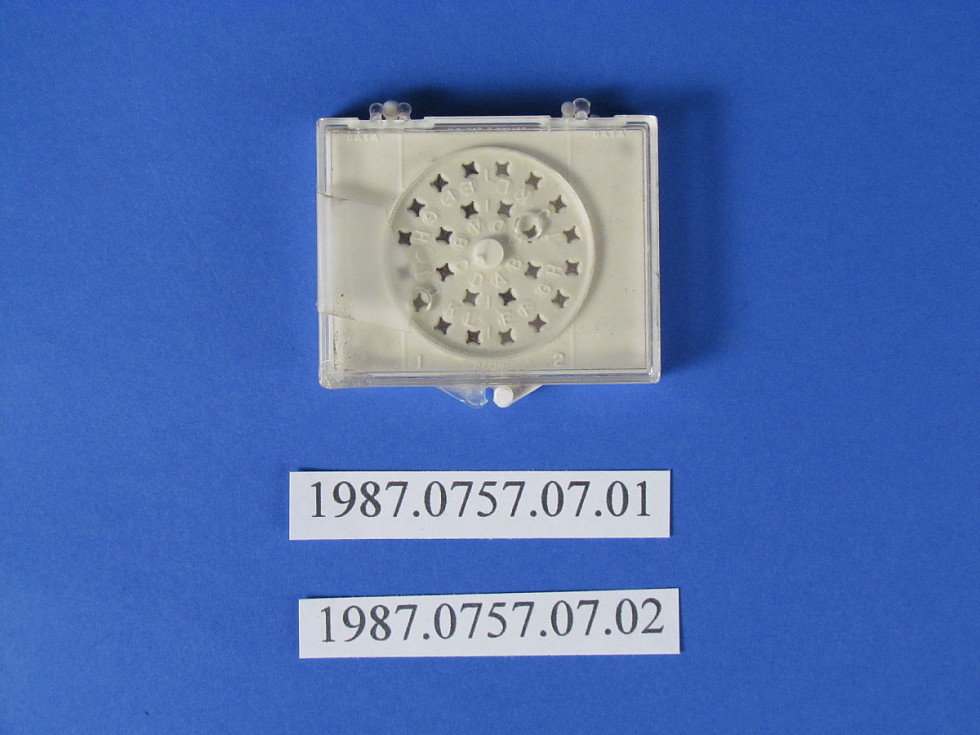
"Electron Microscope Grids and Case"
(“Recombinant DNA in the Lab,” Smithsonian American Women’s History, n.d.")
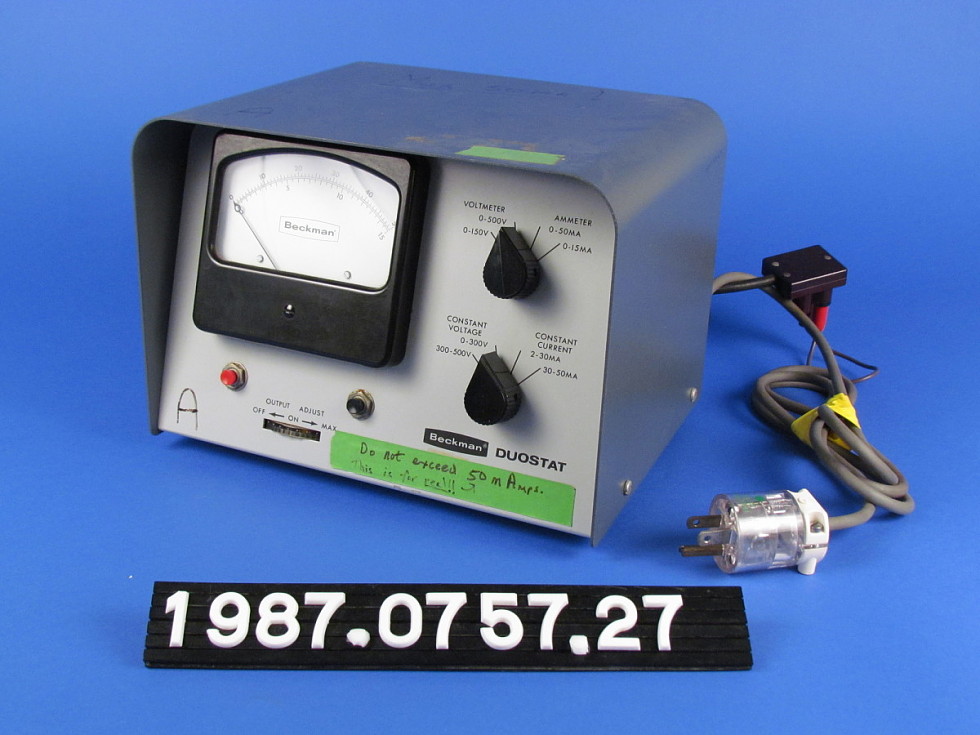
"This power supply was used in the Stanley Cohen lab at Stanford University to run an electrical current through a vertical chamber for gel electrophoresis."
(“Recombinant DNA in the Lab,” Smithsonian American Women’s History, n.d.")
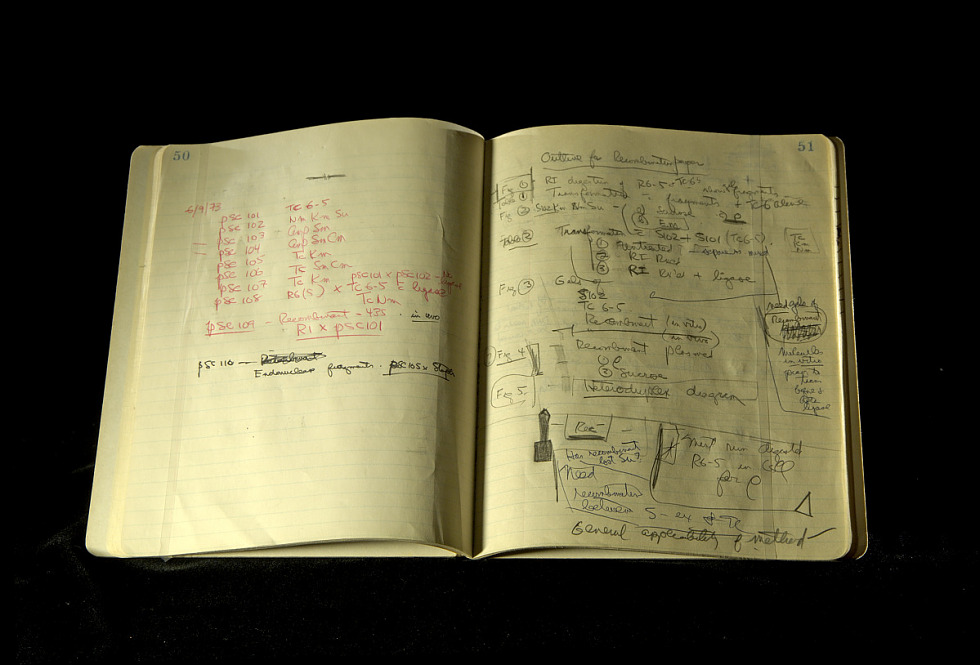
"In a series of experiments between 1972 and 1974 Stanley Cohen, Herbert Boyer, and their colleagues, at Stanford University and the University of California, San Francisco, developed techniques that formed the basis of recombinant DNA technology and helped spur the birth of the biotechnology industry."
(“Recombinant DNA in the Lab,” Smithsonian American Women’s History, 1972-78")
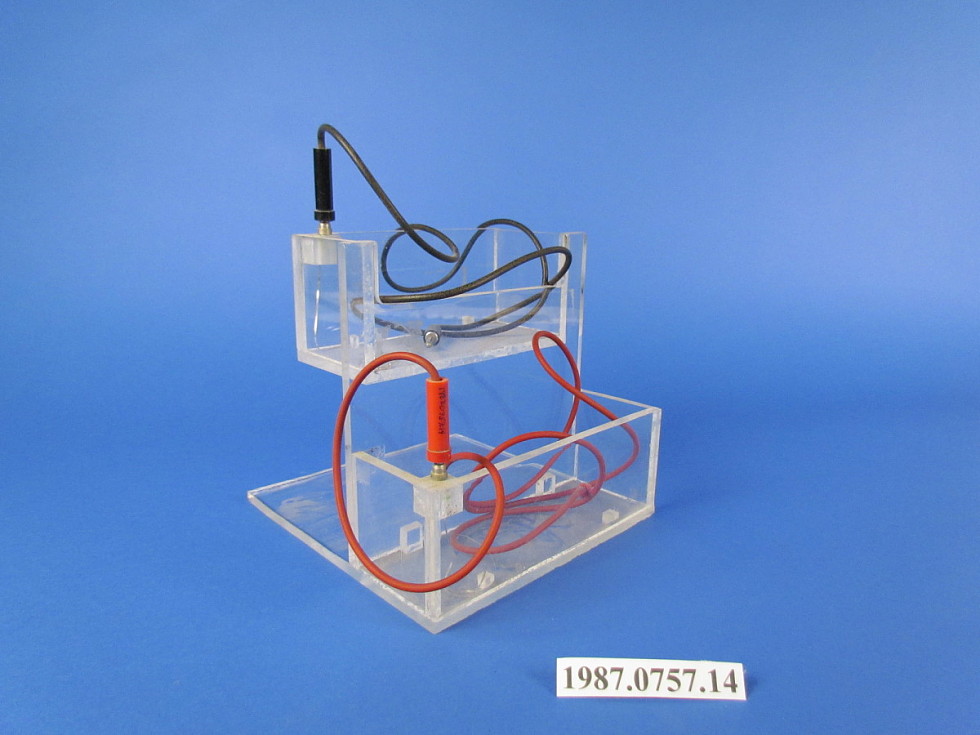
"This vertical chamber for gel electrophoresis was made in 1974 for the Stanley Cohen lab at Stanford University. Gel electrophoresis was one of the most important tools Cohen and Boyer used to analyze the effects of restriction enzymes on plasmids."
(“Recombinant DNA in the Lab,” Smithsonian American Women’s History, n.d.")
Boyer and Cohen and their colleagues published a paper in 1973 containing their research on recombinant DNA.
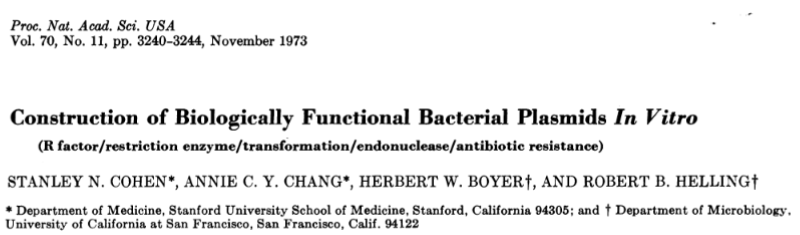
"Construction of Biologically Functional Bacterial Plasmids In Vitro"
(Cohen et al., Proceedings of the National Academy of Sciences, 1973)