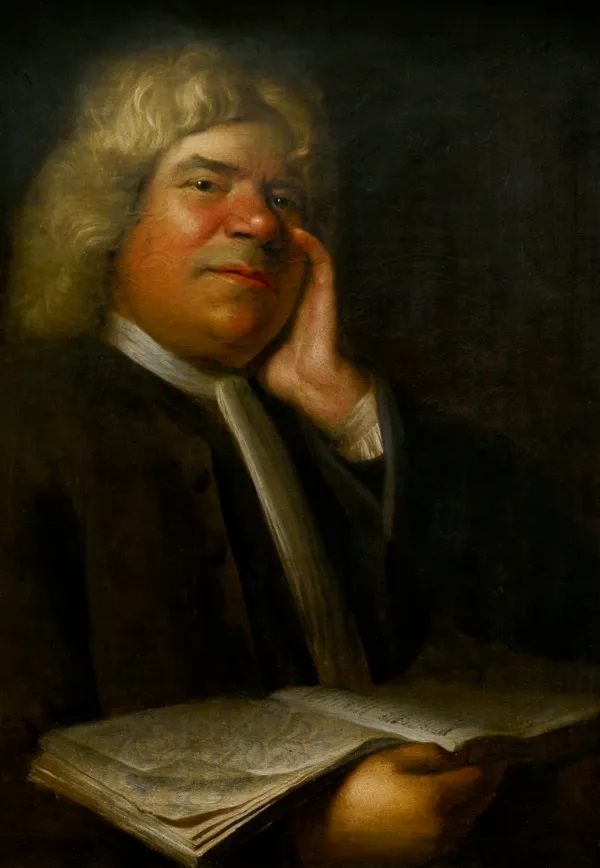
Thomas Fairchild
(Wilkinson, Spitalfields Life, 18 Nov. 2014)
Herbert Boyer and Stan Cohen
Catalysts of GMO Techology
("DNA Double Helix," n.d.)
"The emergence of a new paradigm in any field of science generates, along with the excitement of a new frontier and perspective, an uncertainty about its full implications. This was especially true for the geneticists that fueled the emergence of the recombinant DNA technology during the 1970s."
~Dr. Paul Berg, DNA Researcher, (Berg, Nobel Prize, 24 Aug. 2004)
In 8000 BCE, humans began to use selective breeding and crossbreeding to breed plants and animals. They bred plants and animals with more desirable traits in hopes of having superior offspring. Humans continued this practice for many years (U.S. Food and Drug Administration).
Thomas Fairchild
(Wilkinson, Spitalfields Life, 18 Nov. 2014)
In 1717, British gardener Thomas Fairchild successfully produced an artificial hybrid. He took the pollen from one flower and placed it onto another plant's stigma. He crossbred two different types of flowers, creating the Dianthus Caryophyllus Barbatus, which is also called Fairchild's Mule (“First Artificial Hybrid”).
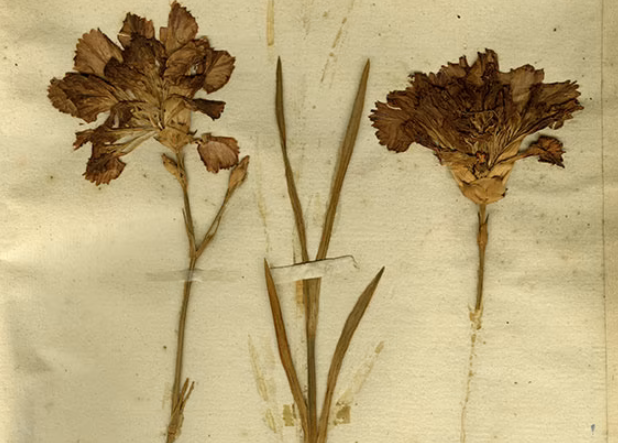
“Two Dried Specimens of Fairchild’s Mule at Oxford University”
(Wilson, Financial Times, 17 Mar. 2017)
In 1866, Gregor Mendel bred two different types of pea plants and developed a basic understanding of genetics and breeding plants (A Timeline). He noticed that depending on the generation of the offspring, some plants carried the dominant trait when others carried the recessive trait (Olby).
"Those traits that pass into hybrid association entirely or almost entirely unchanged, thus themselves representing the traits of the hybrid, are termed dominating and those that become latent in the association, recessive" (Mendel, Experiments in Plant Hybridisation, 8 Mar. 1865).
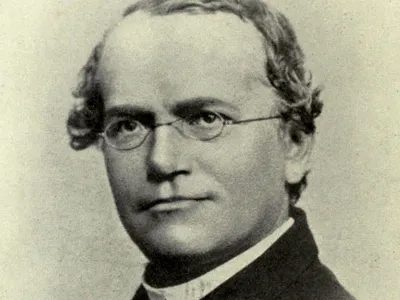
Gregor Mendel
(Olby, Encyclopædia Britannica, 27 Nov. 2018 )
By the early 1900s, researchers were using Mendel's techniques in agriculture to improve yields.
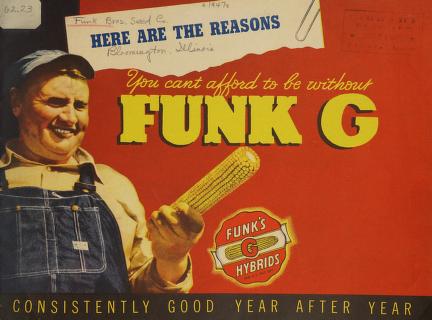
"You can't afford to be without Funk G."
(Funk Brothers Seed Company, Internet Archives, 1947)
The first hybrid seed to be sold was created in 1916 by the Funk Brothers Seed Company (Daynard).
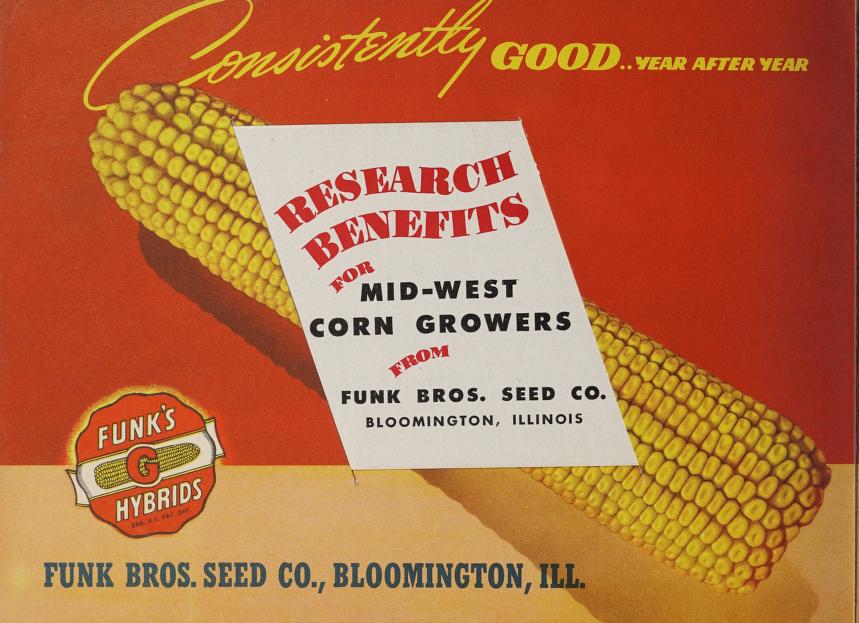
"Consistently Good. . .Year after Year"
(Funk Brothers Seed Company, Internet Archives, 1947)
In 1940, researchers discovered how to rapidly alter an organism’s DNA. Chemicals and radiation were applied to the organism through a process called mutagenesis. The researchers grew each new seed that was produced and monitored its traits. This method laid the foundation for the GMO process (Wieczorek and Wright).
In 1952 Dr. Rosalind Franklin created the first X-ray of the structure of DNA. This demonstrated that DNA has a double helix structure and made it possible for future researchers to understand the basic DNA structure. Afterward in 1953, James Watson and Francis Crick analyzed this X-ray and built the first DNA model (King's College London).
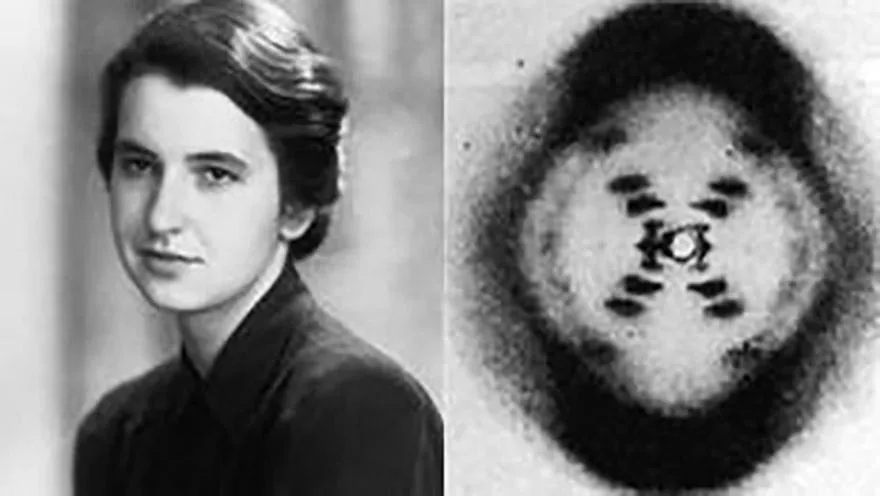
"Photo 51 is one of the world’s most important photographs, demonstrating the double-helix structure of deoxyribonucleic acid: the molecule containing the genetic instructions for the development of all living organisms."
(King's College London, 11 Oct. 2016)
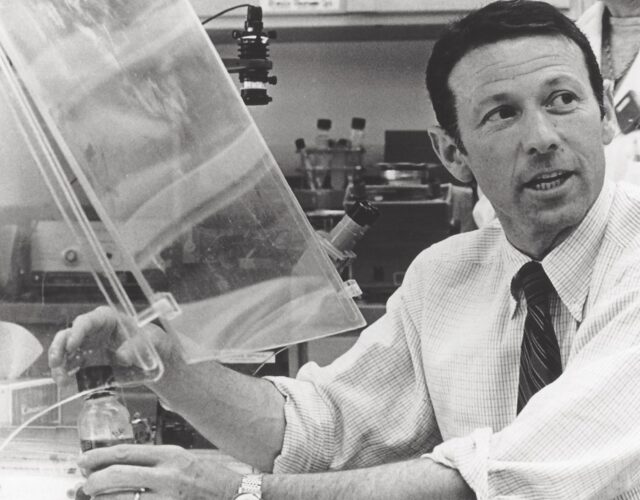
Dr. Berg in the Lab
(“Paul Berg," Science History Institute, 2024)
In 1971 Dr. Paul Berg conducted an experiment involving DNA structure and recombinant DNA. Berg's work laid the foundation for Boyer and Cohen's groundbreaking research (“Paul Berg”).
"My colleagues and I succeeded in developing a general way to join two DNAs together in vitro; in this case, a set of three genes responsible for metabolizing galactose in the bacterium E. coli was inserted into the SV40 DNA genome" (Berg, Nobel Prize , 24 Aug. 2004).